Thursday, December 30, 2010

Working In Agriculture


A wide variety of agriculture jobs exist, ranging from hands-on field work to complex positions in agricultural engineering. Specific job categories include agribusiness, agricultural inspection, agriscience, and farm work. Some positions are learned on the job, while others will require a college degree and specialized training.

Agriculture jobs in the business sector involve working with companies that grow and sell crops and livestock. The distribution, buying, and trading of produce may be supervised. The work typically includes marketing, price analysis, drafting contracts, and farm management. Most of these positions will require a four-year degree or higher, as well as good communication and people skills.

Agricultural inspectors often work for government offices that establish and enforce health and safety regulations regarding the food supply. These inspectors make sure that farms and processing plants are following the proper procedures where food safety is concerned. This usually involves testing livestock for harmful diseases and inspecting food for dangerous microbes and other contaminants.

An agricultural scientist works to improve the quality and safety of both farm animals and crops. These positions are often found in universities and research labs. The agricultural jobs may include improving farm equipment technology to increase the quantity and quality of goods, finding cures for diseases that affect livestock and crops, and discovering more effective methods of pest control. A strong background in science, math, and engineering is necessary for this position.

Farming was likely the very first agriculture job; in addition to crops and livestock, it may also involve specialized animal breeding. To ensure healthy crops, the art of plowing, planting, and fertilization must be learned for each crop type. The responsible use of pesticides is also important, as well as the routine maintenance of facilities and equipment. A production manager may be employed to oversee progress, while also finding ways to increase production using less time and money. Many farm positions are seasonal, employing extra workers during certain months to pick fruits and vegetables.

To trace the latest information in agricultural scenario and agro industry, agricultural, products, reserves, Indian importers, Trade Leads, business directories, catalogs and product reviews, www.made-from-india.com is the precise Indian Business to Business (B2B) portal. It maintains a large database of Indian Agricultural manufactures suppliers, India Agricultural products, Indian Farm Products, suppliers & producers of agricultural products including fertilizers, pesticides, animal feeds & extracts, agricultural product stocks, vegetable oil, Indian Agriculture information online news, irrigation equipment, machines & appliances, fruits & juices, edible products etc.

Thursday, December 9, 2010

Investment in Agriculture


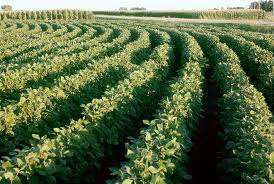
The procedure of investment in land that awaits future urban development has been carried out for generations by both big businesses and private investors. For several it has been a gainful venture, resulting in many folks gathering large land portfolios and substantial amounts of wealth. Mainly, this investment has taken place in agricultural plots surrounding towns, villages and cities as these are seen as ripe for development as settlements expand. This type of investment has recently been opened up to the masses with many companies offering chances to unite funds for part ownership of land.

The chances to harvest large financial rewards from land investment are great. In some cases it is not even required to offer a large financial inoculation, part ownership schemes have allowed investors to begin investment in land for as little as fifty pounds, paid on a weekly basis. As a result investors differ from those attempting to build up a retirement nest egg to those struggling to get on the possessions stepladder.

In terms of the rewards some estimates consider that an investment of twelve thousand pounds could lead to a return of more than fifty. This will take about ten years but when compared to other investment opportunities the returns are excessive; obviously however, as with most investments the greater the risk, the higher the profits. As a result, those allowing for buying land should always research a number of companies carefully as an approach without intimate knowledge can be seen as foolish. This appraisal should include an appraisal of a company's credibility and past history in giving investors honest returns.

In the media the land investment business has not received the best of press in recent years. There are still a large number of companies out there that is measured trustworthy; all it takes is a little effort in researching the industry to find them. Once this research has been carried out, the returns from share purchasing can obtained quickly.

Eventually a company that appreciates the privilege of investors to research proposed opportunities is the ideal; in addition, they should also readily supply this information so their clients can make informed choices pertaining to any investments. Part of this information should include reports from local authorities on the transport links, mains supply and chances of planning permission for any plot of land. It is worth remembering however that while the benefits are certainly there, they are never guaranteed; investment is a risk and hence there is always the chance of losing money. As the demand for land for housing continues to grow however, this risk is reducing to some extent, through astute financial investment, profits should become realism.

As well as the profits, many investors are choosing land as a way to avoid certain government legislation. For example, agricultural land and forestry is a great way to get certain tax breaks; one example is that owners of these types of land do not have to pay legacy tax as long as they have been in ownership of this land for more than two years; with certain dodge, this type of investment is also a way to avoid the capital gains tax.

Obviously investment in land is popular with many. Thanks to a selection of companies it has also been opened up to members of the general public making speculating an attractive profit making chance. As government plans to increase towns and speed up residential construction continue with pleasure, investing can be seen as a truly sensible way to make money.

To trace the latest information in agricultural scenario and agro industry, agricultural, products, reserves, Indian importers, Trade Leads, business directories, catalogs and product reviews, www.made-from-india.com is the precise Indian Business to Business (B2B) portal. It maintains a large database of Indian Agricultural manufactures suppliers, India Agricultural products, Indian Farm Products, suppliers & producers of agricultural products including fertilizers, pesticides, animal feeds & extracts, agricultural product stocks, vegetable oil, Indian Agriculture information online news, irrigation equipment, machines & appliances, fruits & juices, edible products etc.

Thursday, December 2, 2010

Farmers Around the World Should Be Encouraged to Use Biopesticides


Farmers and growers have always used some natural methods to both deal with plant pests and diseases as well as to strengthen the soil.

After all, what is compost but decomposing vegetable matter which is then put back into the soil to improve its richness, fiber content and the nutrients plants need for growth.

Plant extracts were arguably the earliest agricultural bio pesticides, as history records that nicotine was used to control plum beetles as early as the 17th century. There were also experiments using mineral oils as plant protectants in the 19th century.

Bio pesticides most frequently used on specialty crops like specific fruits. A 2006 study estimated that orchard crops had the highest rate of bio pesticide use at 55%.

Bio pesticides are derived from natural materials like animals, plants, bacteria, and certain minerals. Plants like mint, neem, papaya and garlic as well as baking soda have applications as pesticides and are considered to be bio pesticides.

It was after the 1960s that modern bio pesticides research really took off following a change of attitude to chemical-based pesticides that were widely used during the 1960s and 70s and the attitude change is often attributed to Silent Spring, a book by American naturalist Rachel Carson.

The book the severe effects of organochlorines on humans and the environment; the book triggered the environmental movement and also led to subsequent bans on organochlorine pesticides.

Dave Moore, senior researcher in invasive pest management at the Center for Agricultural Bio science International (Oxford, UK) suggests that more and more organic farming is embracing bio pesticides, especially in the developing countries of Africa and newly-industrialized emerging economies like China and India.

He said: "In many parts of the world biopesticides are accepted easily, where available, and are seen as totally compatible with organic."

In India, for example, anyone cultivating vegetables in a residential area is required to use only bio pesticides. The Asian and Australasian market for microbial- and nematode-based pesticides is estimated to be worth approximately $132.5 million per annual and has grown by 35.7% since 2004.China, India and Japan are thought to be the three largest markets in the region, and most of the products used have been researched and developed locally.

In Europe the estimated market share is 26.7% and again is projected to grow. The most widespread use of biopesticides is in the US.

One of the main difficulties in promoting wider use of biopesticides and other low-chem agricultural products is that they tend to be geographically limited in use and locally-specific in their effects on pests, viruses or fungi.

This makes them costly to research and produce, apart from the costs and time involved in getting them through the trial and registration process, while at the same time limiting the market in which they can be sold.

There is now a growing body of evidence that they are better for the environment, the land and for growing healthy, natural food free of chemical residues and that they have the potential to contribute to reduced damage of the soil as well as reducing the widespread incidence of hunger in less developed parts of the world.

www.made-from-india.com is the precise Indian Business to Business (B2B) portal. It maintains a large database of Indian Agricultural manufactures suppliers, India Agricultural products, Indian Farm Products, suppliers & producers of agricultural products including fertilizers, pesticides, animal feeds & extracts, agricultural product stocks, vegetable oil, Indian Agriculture information online news, irrigation equipment, machines & appliances, fruits & juices, edible products etc.

The Reasons Agriculture is Important


Why is agriculture important? The concept of 'food security' is fundamentally important, and for that reason, agriculture is important. The task of feeding its people has been perhaps the first priority of its rulers throughout history. As such, agriculture is considered to be the very basis of political and social stability of a nation since times immemorial.

Moreover, the agricultural sector plays an important role in the sphere of providing large scale employment to people. Large and moderately large farms employ workers to undertake the various jobs relating to cultivation of crops and care of farm animals. In most of the countries of the world, agriculture still remains the biggest sector responsible for the employing and feeding a large percentage of the population.

Agriculture is also important from the point of view of appraising the standard of a country's development, based on the competence of its farmers. Poorly trained farmers cannot apply the advanced methods and new technologies. The prominence of science and technology in the development of agriculture is quite clear from the words of Deng Xiaoping -

The development of agriculture depends first on policy, and second on science. There is neither any limit to developments in science and technology, nor to the role that they can play in the field of agricultural growth'.

Though agriculture often plays a contributory role in the 'Gross Domestic Product' - GDP - of most countries, it nevertheless requires a substantial boost from both the local and the international community.

Agriculture is traditionally based on bulk manufacturing. Harvesting is done once a season, most of the times, and stocked and used later. In fact, some thinkers opine that people have begun to adopt 'batch processing' and 'stocking' in manufacturing, as a result of the practices from agricultural thinking. Before industrialization, people with the biggest stocks of food and other supplies were considered more stable, and they were able to face challenges of nature without having to starve.

So important is the role of agriculture that new concepts keep 'cropping up' to give the traditional activity a modern turn. One such new concept the world is raving about these days is - the importance of 'organic farming'. There is evidence that, apart from their numerous other benefits, organic farms are more sustainable and environmentally sound, giving agriculture a new dimension.

The importance of agricultural practices was further established when 'Organic food' began as a small movement decades ago, with gardeners and farmers rejecting the use of conventional non-organic practices. With the growth of the Organic food market now outpacing much of the food industry, many big companies have ventured into it. With the emergence of multi-national companies, and with the creation of a legal certification framework such as the Soil Association, there is every doubt that the very definition of organic food will change, making it more of a commercial activity than ever before!

In fact, modern agriculture has already undergone a sea-change from the ancient times. Today, the importance of agriculture lies in the fact that it is practiced both for subsistence as well as commercial reasons!

To trace the latest information in agricultural scenario and agro industry, agricultural, products, reserves, Indian importers, Trade Leads, business directories, catalogs and product reviews, www.made-from-india.com is the precise Indian Business to Business (B2B) portal. It maintains a large database of Indian Agricultural manufactures suppliers, India Agricultural products, Indian Farm Products, suppliers & producers of agricultural products including fertilizers, pesticides, animal feeds & extracts, agricultural product stocks, vegetable oil, Indian Agriculture information online news, irrigation equipment, machines & appliances, fruits & juices, edible products etc.

Thursday, November 18, 2010

The Reasons Agriculture is Important


Why is agriculture important? The concept of 'food security' is fundamentally important, and for that reason, agriculture is important. The task of feeding its people has been perhaps the first priority of its rulers throughout history. As such, agriculture is considered to be the very basis of political and social stability of a nation since times immemorial.

Moreover, the agricultural sector plays an important role in the sphere of providing large scale employment to people. Large and moderately large farms employ workers to undertake the various jobs relating to cultivation of crops and care of farm animals. In most of the countries of the world, agriculture still remains the biggest sector responsible for the employing and feeding a large percentage of the population.

Agriculture is also important from the point of view of appraising the standard of a country's development, based on the competence of its farmers. Poorly trained farmers cannot apply the advanced methods and new technologies. The prominence of science and technology in the development of agriculture is quite clear from the words of Deng Xiaoping -

The development of agriculture depends first on policy, and second on science. There is neither any limit to developments in science and technology, nor to the role that they can play in the field of agricultural growth'.

Though agriculture often plays a contributory role in the 'Gross Domestic Product' - GDP - of most countries, it nevertheless requires a substantial boost from both the local and the international community.

Agriculture is traditionally based on bulk manufacturing. Harvesting is done once a season, most of the times, and stocked and used later. In fact, some thinkers opine that people have begun to adopt 'batch processing' and 'stocking' in manufacturing, as a result of the practices from agricultural thinking. Before industrialization, people with the biggest stocks of food and other supplies were considered more stable, and they were able to face challenges of nature without having to starve.

So important is the role of agriculture that new concepts keep 'cropping up' to give the traditional activity a modern turn. One such new concept the world is raving about these days is - the importance of 'organic farming'. There is evidence that, apart from their numerous other benefits, organic farms are more sustainable and environmentally sound, giving agriculture a new dimension.

The importance of agricultural practices was further established when 'Organic food' began as a small movement decades ago, with gardeners and farmers rejecting the use of conventional non-organic practices. With the growth of the Organic food market now outpacing much of the food industry, many big companies have ventured into it. With the emergence of multi-national companies, and with the creation of a legal certification framework such as the Soil Association, there is every doubt that the very definition of organic food will change, making it more of a commercial activity than ever before!

In fact, modern agriculture has already undergone a sea-change from the ancient times. Today, the importance of agriculture lies in the fact that it is practiced both for subsistence as well as commercial reasons!

To trace the latest information in agricultural scenario and agro industry, agricultural, products, reserves, Indian importers, Trade Leads, business directories, catalogs and product reviews, www.made-from-india.com is the precise Indian Business to Business (B2B) portal. It maintains a large database of Indian Agricultural manufactures suppliers, India Agricultural products, Indian Farm Products, suppliers & producers of agricultural products including fertilizers, pesticides, animal feeds & extracts, agricultural product stocks, vegetable oil, Indian Agriculture information online news, irrigation equipment, machines & appliances, fruits & juices, edible products etc.
Tuesday, November 16, 2010

Top 7 Highlights of Australian Agriculture


Australia is a major agricultural producer, producing a great range of agricultural products for local, and international consumption. Some of this production is made possible through the use of protective canopies. How many of the following were you aware of?

Crops

Wheat is the most important agricultural crop to the Australian economy, judging by its monetary value, land usage and overall volume of production. It dwarfs the next nearest crop, barley, by a factor of over three. Barley itself has production over three times the next nearest crops. A cluster of crops jostle for this third position, with production of sorghum, cottonseed, canola, oats and lupines all usually significantly over one thousand kilo tonnes per annual.

Horticulture

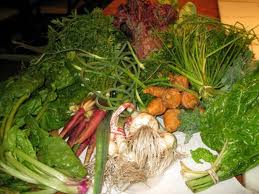
While much of Australia is desert, and unsuitable for agriculture, the sheer size of the country means there are a variety of climatic zones. Oranges, apples, potatoes, carrots and tomatoes are the main fruits and vegetables being successfully grown in temperate areas. In warmer northern regions tropical fruits like bananas, mangoes and pineapples grow well.

Wine

It's not only Aussies that enjoy a good drop. Australian wine can be found on retailers' shelves all over the world. The major producing regions in Australia are the Barossa Valley in South Australia, Margaret River in Western Australia, the Hunter Valley in New South Wales and Sunraysia in Victoria. A strong Australian dollar, and oversupply of grapes have been challenges for the industry in recent years. The upside has been cheaper wine for Australian consumers.

Cattle

Over sixty percent of Australian beef is exported, largely ending up on American and Japanese plates. Australia has stayed BSE (mad cow disease) free, giving it a major advantage over other producers in recent years. Australian sheep and lambs are also an important export. The Middle East is a major market. Pork is also produced in Australia, predominantly for local consumption.

Dairy farming

Milk, cheese, yoghurt and butter are some of the great locally produced dairy products Australians can enjoy, and maybe take for granted. The Westernisation of diets in Asia has seen demand for some of these products also increasing offshore. Increasing demand in the Middle East is also seen as supporting dairy farming in Australia, going into the future.

Seafood

Rock lobsters, prawns, tuna and abalone are some of Australia's largest export earning seafood products. With overfishing becoming a major global conundrum, it is encouraging to see that the proportion of Australia's annual seafood production coming from aquaculture has been steadily rising. It now stands at around a third of overall production.

Wool

Sheep not only provide great lamb roasts, but also some of the world's finest wool. The Merino variety of sheep is know for the high quality of its wool, and Australia dominates this sector, with around half the world's Merino wool production. For the wool market as a whole, Australia's market share is a little under ten percent.

Australia has been quite successful in the production and harvesting of the agricultural products listed above. The use of bird netting has been useful in protecting valuable crops from pests. Managing these and other agricultural challenges need to continue to keep Australia as a successful agricultural producer.

www.made-from-india.com is the precise Indian Business to Business (B2B) portal. It maintains a large database of Indian Agricultural manufactures suppliers, India Agricultural products, Indian Farm Products, suppliers & producers of agricultural products including fertilizers, pesticides, animal feeds & extracts, agricultural product stocks, vegetable oil, Indian Agriculture information online news, irrigation equipment, machines & appliances, fruits & juices, edible products etc.

Friday, November 12, 2010

Gypsum Valuable Input for Agriculture


India ranks second on the basis of population in the world. Agricultural land utilised by the burgeoning population, the cultivable land resource is shrinking day by day. To meet the food, fibre, fuel, fodder, and other needs of the growing population, the productivity of agricultural land has to be increased rationally. This requires the use of all resources judiciously. In India, the mineral gypsum is mostly used in the manufacture of cement, fertiliser, plaster of Paris, ceramics and distemper. Smaller quantity is used as soil conditioner, for carving and statuary purposes. India has huge resources of natural gypsum of the order of 1120 million tonnes, of which recoverable reserves are estimated at 237 million tonnes. Over 95 per cent of the natural gypsum come from Rajasthan.

Gypsum is chemically calcium sulfate dihydrate (CaSO4.2H2O). When dissolved in water, it yields calcium ions (Ca2+) and sulfate-sulfur ions (SO42-). Both of these ions are essential major nutrients for growing plants. In addition to this, calcium also plays a vital role in establishing and maintaining good chemical balance in soil, water and plants. Gypsum is one of those rare materials that perform in all three categories of soil treatment: an amendment, conditioner, and fertilizer. The usage of gypsum in agriculture can be grouped into following heads:

Reclaims soil sodicity: The sodic soils have exchangeable sodium percentage (ESP) more than 15, it must be lowered for soil improvement as well as better crop growth. The calcium supplied by gypsum replaces the sodium held at the clay-exchange sites. The replaced sodium can be leached from the soil as sodium sulfate to an appropriate sink.

Decreases the toxic effect of NaCl salinity: Calcium from gypsum has a physiological role in inhibiting the uptake of sodium by plants. Thus plant are mitigate the sodium toxicity, which is more pronounced in the salt affected soils.

Decreases pH of sodic soils: The sodic soils are characterised by the high soil pH (>8.5). Gypsum lowers the high pH of sodic soils or near sodic soils to 7.5 to 7.8. These values are in the range of acceptability for growth of most crop plants. Increased calcium uptake by roots when gypsum is applied can decrease the pH of the rhizosphere.

Creates favorable soil EC: The more EC value of the soil is undesired for the crop growth. The high EC of soil are due to fertilizer application as well as by the weathering of soil minerals. Gypsum, being readily soluble, results in proper buffered solute concentration (EC) in soil to maintain soil in a flocculated state.

Makes excess Magnesium non-toxic: Calcium is essential to the biochemical mechanisms by which most plants nutrients are absorbed by roots. Without adequate calcium, uptake mechanisms would fail. In soils having unfavorable calcium magnesium ratios, such as serpentine soils, gypsum can create a more favorable ratio. Thus render Magnesium non-toxic.

Decreases heavy-metal toxicity: Calcium plays a role of regulator for balance of micro-nutrients, such as iron, zinc, manganese and copper, in plants. Calcium prevents excess uptake of many of them; and once they are in the plant, calcium keeps them from having adverse effects when their levels get high. Calcium in liberal quantities helps to maintain a healthy balance of nutrients and non-nutrients within plants. Gypsum also removes excess of Boron from sodic soil. It also regulates non-essential trace elements.

Improves soil structure: Gypsum provides calcium, which, flocculate clays in acid and alkaline soil. A flocculated clays form friable soil with improved soil structure and tilth. It also allows for deeper, healthier root development and water penetration.

Prevents crusting of soil: Gypsum application can decrease and prevent the crust formation on soil surfaces which result from rain drops or from sprinkler irrigation on unstable soil. It can prevent crusting that result when acid soils are limed and the gypsum is coapplied with the lime.
Improves compacted soil: Gypsum can break up compacted soil and decrease penetrometer resistance. Combination with organic amendments also helps, especially in preventing return of the compaction. The soils applied with gypsum have low bulk density.

Makes slightly wet soils easier to till: Soils that have been treated with gypsum have a wider range of soil moisture levels where it is safe to till without danger of compaction or deflocculation. Even a liberal application of gypsum is a good procedure for starting a piece of land into no-till soil management or pasture. Gypsum also improves the ability of soil to drain and not become waterlogged due to a combination of high sodium, swelling clay, and excess water.

Stops water runoff and erosion: Gypsum improves water infiltration rates into soils and also the hydraulic conductivity of the soil. The use of gypsum can decrease wind and water erosion of soil.

Improves swelling clays: Gypsum can decrease the swelling and cracking associated with high levels of exchangeable sodium on the montmorillonite-type clays. As sodium is replaced by calcium on these clays, they swell less and therefore do not easily clog the pore spaces through which air, water and roots move.

Increases water retention in soil: Gypsum when applied to sodic soil reduced the levels of exchangeable sodium resulted in increase in water retention. The improved soil structure help in the more retention of water.
Increases the stability of soil organic matter: Gypsum is a source of calcium responsible for the binding of soil organic matter to clay and gives stability to soil aggregates.

Improves low-solute irrigation water: Gypsum is used to increase the solute concentration of low-solute water used for irrigation. Irrigation water from rivers that no longer have sources of leachable salts either penetrates poorly into soil or causes soil particles to degrade which results in low-water penetration. The problem can be corrected with surface-applied gypsum or application to the irrigation water.

Improves water-use efficiency: Gypsum application increases water-use efficiency of crops. Improved water infiltration rates, improved hydraulic conductivity of soil, better water storage in the soil all lead to deeper rooting and better water-use efficiency.

Efficiently use low quality irrigation water: Use of reclaimed municipal wastewater is important for conservation of natural resources. Reclaimed water can be satisfactorily used if amended with gypsum and water-soluble polymers.

Improves fruit quality and prevents some plant diseases: The quality of fruit depends on the amount of calcium. Calcium is nearly always only marginally sufficient and often deficient in developing fruits. Calcium moves very slowly, if at all, from one plant part to another and fruits at the end of the transport system get too little. Calcium must be constantly available to the roots. In very high pH soils, calcium is not available enough; therefore, gypsum helps. Gypsum is used for peanuts, which develop below ground, to keep them disease free. Gypsum helps prevent blossom-end rot of watermelon and tomatoes and bitter pit in apples. Gypsum is preferred over lime for potatoes grown in acid soils so that scab may be controlled.

Decreases loss of fertilizer nitrogen to the air: Calcium from gypsum can help decrease volatilization loss of ammonium nitrogen from applications of ammonia, ammonium nitrate, urea, ammonium sulfate, or any of the ammonium phosphates.

To trace the latest information in agricultural scenario and agro industry, agricultural, products, reserves, Indian importers, Trade Leads, business directories, catalogs and product reviews, www.made-from-india.com is the precise Indian Business to Business (B2B) portal. It maintains a large database of Indian Agricultural manufactures suppliers, India Agricultural products, Indian Farm Products, suppliers & producers of agricultural products including fertilizers, pesticides, animal feeds & extracts, agricultural product stocks, vegetable oil, Indian Agriculture information online news, irrigation equipment, machines & appliances, fruits & juices, edible products etc.